New & Noteworthy
Stay up to date with news, highlights, & features from across Freeman's.
Stay up to date with news, highlights, & features from across Freeman's.
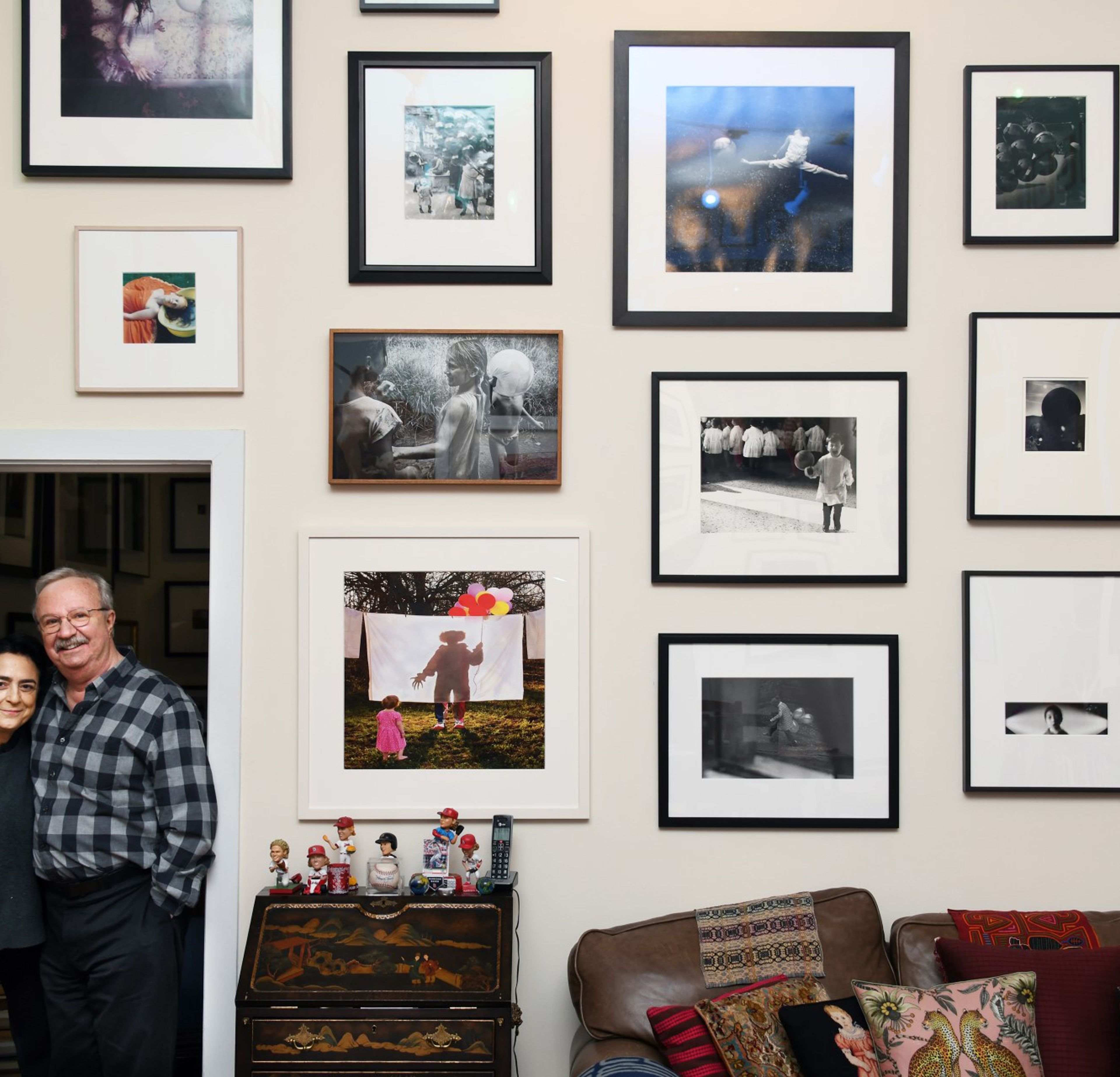
Hindman is thrilled to present Joe Baio in conversation with Hindman’s Director and Senior Specialist of Photographs Laura Paterson. Ahead of our New York auction Forever Young: Photographs from the Joe Baio Collection, hear Joe speak about his experience with collecting, how he got his start with photography, and this showstopping collection coming up to the auction block. Laura Paterson: Hello, Joe. What prompted you to start collecting photographs? Joe Baio: When I had my children, and even before that, I was a casual photographer. As they got older, I spent perhaps obsessive amounts of time taking pictures of them. We would go on vacation, and I would take 115 rolls of film and, shoot them, so to speak. At a certain point, of course, they would say, "That's enough, Dad, put the camera down. We're on vacation." From there, I took a bunch of courses at ICP, including, if you can believe it, seminars with Sally Mann, Nan Goldin and Larry Fink, the only area, the only art form that a complete rank amateur can actually rub elbows with a master. Which they were. Lot 34 | Sally Mann (born 1951) | Tobacco Spit, 1987 | Estimate: $5,000 - $7,000 It's a little less so now that they make money, but back then, this was 1988 and '89, it was a very different era. So, seeing these amazing photographers and them showing the work, and Sally Mann in particular laying out five or six examples of, let's say, Emmett, the last time he modeled nude, showing how she didn't get it, she didn't get it, she didn't get it, over a two-year period. And then, the hand of God reached in and created that remarkable picture, where his finger's just barely touching the water, the sky is perfect, the trees are behaving, and his gaze is magnificent. I, of course, would've accepted any one of the earlier ones with great joy. So, I caught on that these folks know what they're doing, (laughs). And it got to be a bug. I'm a bit obsessive; obviously, any collector is. So, I started collecting and really, you don't start as a collector, you start as kind of an acquirer. I didn't have any grand scheme or plan. In fact, I know that one of the things that you've been interested in is what's the first thing I ever bought? I'm jumping to it. It was a portfolio, not a single picture. I saw Sally Mann's show, Immediate Family, 1989, while I was taking the course. I remember walking through, saying, "This is the most remarkable thing I've ever seen." I did not buy anything because I was afraid, and they were expensive, $3,000 each. So, (laughs) of course, I should have bought the whole show. This is what got me started. And you start by buying a certain number of things; that started in 1989. By 1994, I think, I considered myself a collector because I had more pictures that I could hang. That was sort of my own internal definition of ... that's when you're collecting when you can't even see them all. And from '94 on, it just took off like a rocket ship and has been a great source of joy for me. LP: What are you looking for now when you're collecting? What attracts you? JB: Well, the thing about collecting is, now there's a big body of work that I have, and it's all related to childhood and adolescence, family. But there are all these sub-themes that are running through. You know that when I hang the work, we take it down every year, and put up a new hang. I have all these sub-themes. And it could be geographic, Eastern photography; it could be emotional, sheer joy. It could be water. It could be anything: athletes, kids in trouble. I have an endless supply of alternatives. So, with this body of work that I have, I'm sort of looking for things that will supplement and make the collection more playful, more interesting to me, and give me more opportunities. But ultimately, the image itself has to wrestle me to the ground. LP: Like the Heath. JB: That's right, Dave Heath is a good example. But really, it's almost true for everything I've ever gotten, you know? At some point, it takes my breath away. Lot 28 | Dave Heath (1931-2016) | Vengeful Sister, Chicago, 1956 | Estimate: $10,000 - $15,000 JB: I don't buy things instantaneously, I usually let them marinate a bit. My first big fair was AIPAD in 1998. I remember just being absorbed. I bought 14 pieces. I remember every piece; I remember how I felt when I saw it. It's an idea of building something. And that way, when I hang, if I have an upcoming theme of sports, and I don't think about that as I'm looking. But when I see an image and it's Roy DeCaravain a playground, kids in a playground, that one might be oh, my goodness. Now, the image has to be commanding of my attention and my feelings. After that, I think about, does it fit? You would think that limits the amount that you would collect; it actually is expanding the possibilities and it's just so much fun. LP: Do you find yourself gravitating towards more contemporary photography versus historical photography? JB: No. No, not really. It could depend on the fair, right? There was a New York fair that just happened, and it was predominantly contemporary. So, that sort of puts you in the mood. I also thought it was a good show. But I have a lot of vintage and traditional work and street photography and studio photography, and some unknown. But for the most part, my tastes are very broad, and I'm open to being surprised, a big part of what I like. LP: Yes. The curious collector. That's nice. My next question is what prompted you to sell this group of photographs from your larger collection? JB: Well, as you know, I've been doing this for quite a while and I have probably more photographs than I will need, (laughs). It's not about "need", it's about love. So I had to make a decision: am I a collector or a collected? In other words, (laughs), am I done? Because I can keep doing this forever, and you must identify what it is that you love and want to continue to do. I have seven aspects of collecting, but one of them obviously is buying work and adding it to the collection. Did I want to stop that? Because at a certain point that can happen. I didn't want to stop. I loved the collecting aspect of it. So, by selling this group, I'm creating the means to continue the hunt, the search, and wrestling the picture down to the ground and putting it in my collection. I'm sort of going to be net neutral. So, what goes out will come back in, in a different form, because that's a great part of the fun. Every picture that's in this sale I have already had up, sometimes multiple times, in the decades that we've been doing hangs. And I take pictures of the pictures as they're hanging. So, I still have them all. Once you owned one of these it has a special place. They’re still part of- LP: Still part of the chain of ownership. JB: That's right. All part of the chain. And anytime I see another version of it, or even mine, it echoes in whatever I've already had, another source of joy. So, it stays with me even when it's gone, and it provides the means to keep this crazy passion going. LP: Yes, your children will support you. JB: Yes. That's the idea, (laughs). LP: Wonderful, we’ve almost come to the end of my questions. I wondered if you had any favorites in the selection that you're quite sorry to part with? JB: You had told me before you were going to ask me that, so I went through the catalog with that in mind. And every time I turned the page, I was, "Oh! Oh." "That one? Oh, no." I've had sales in the past, in part because of a divorce, so that was a painful separation. But I do understand that this is all temporary. And in that sense, yes, the pang would be there. Every photographer who has a work that's in the sale, has another work that's still in the collection. So, I didn't say goodbye to Robert Frank. I'm not saying goodbye by any means to Justine Kurland, although I'm selling one piece I just acquired, 32, from her Girl Pictures series, which I'm going to hang around the upper floor of my apartment. Lot 82 | Justine Kurland (1969) | Hula Girls, Christianburg, Virginia, 2000 | Estimate: $1,500 - $2,000 That's true of every photographer except one: Outerbridge. I only had one of his works; it is such a quirky, unusual, and remarkable photograph. Everything about it, (laughs), the pose, the background ... It's just wild, and intriguing that that photographer, who really is unique in the pantheon of photographers. LP: Very interesting guy. JB: He was a very interesting guy and really, an experimental photographer in lots of ways, and yet also, he did advertising and other stuff. I mean, just a really fascinating person. So, he's the only one that I don't technically own anymore, so I'll probably be on the lookout for Outerbridge going forward; we'll see. But everybody else is still part of the family. LP: My final question is you've been collecting for decades now, and you know the ropes, and you have a very particular sensibility. Do you have any advice that you'd give to someone who's starting out on the journey of collecting photography? JB: Sure, I try to keep it simple. I work at a law firm and I'm starting up talks for young collectors, people who want to do something - they don't necessarily know what - and I'm going to talk to them about opportunities, the benefits, et cetera, et cetera. A couple of things that I would say as sort of a base: number one, don't even think of yourself as a collector et, if you're really just starting. It's too vast. I mean, you could be intimidated by somebody who has 6,000 prints, or 500, or 200, and an extreme focus. Relax. You have walls, you want beautiful things on the walls? Start with that. Figure out what you like, what you love, and then go about it. Now, you must learn how to go about it, and that's where the fear factor is. You must recognize all these impediments to your collecting, and kind of let loose. For example, "Well, boy, if I spend $3,000 on this, how much will I get later? What is it worth? Are they going to make another copy?" Think of a beautiful work of art that you're going to live with for a long time. And maybe you won't. Maybe your tastes will change. But for now, this thing has taken your breath away. Think of it as it brings me as much joy as Starbucks coffee and croissants every day. You've paid for the $3,000 picture in one year. Now it's free, right? Now you have this beautiful thing that you live with. Are you getting $10 of joy a day out of it? Then it's free, basically. So, don't worry about resale and they can make another one and maybe somebody else has it. That's an important thing for you to eliminate. And, the fear of, "Am I getting ripped off? It's too intimidating. I don't know what I'm doing." You don't have to know what you're doing. It's a relatively modest beginning, keep it as such, and proceed as the emotions and as your pocketbook allows you. I started with this one portfolio, and who knew? LP: What was it? JB: (laughs). It wasn't even childhood or adolescence. It was a Double Elephant portfolio of Ralph Gibson. LP: Ah. Fascinating. JB: ... my partner was involved with Double Elephant, and he said, "Look, there’s this thing, you get 15 pictures, you can put them up. And then in a couple of years, you can donate them, and they'll be worth more." So, it truly is free. So, I said, "Oh, that sounds interesting." And I did donate the Ralph Gibson one, but the next one was a Larry Fink... and I couldn't donate it. That was a good sign for me. I wanted to keep it. So, that one and a Mary Ellen Mark one, I kept them. And then I realized, "Well, I don't need that part of it. I'm just going to now start collecting." And then I went to auctions, and of course, I'm not suggesting any young collector go directly to auctions, but I kind of did that early. I don't know why, even before gallery visits. LP: Although if it's a decent auction specialist, they're quite a good touchstone on what people should be looking at and whether it's a "good buy". So, people shouldn't necessarily be afraid of auctions. JB: No. They're not. My fear always was, "Okay", I'd look around the room, and that was when everybody was in the room. Which was a scary moment; you'd see Larry Miller, Howard Greenberg, Barry Singer from ... LP: These are big gallerists. JB: ... the West Coast. LP: Yes. All the big people. JB: Yeah, they were all in there, right? Now I'm raising my stupid little paddle, and I know more than they do? That could be a thought. And then I thought to myself, "Well, no, they have to be able to sell it for a lot more, because they're trying to make money. I just want the thing." So, I had room, in a sense. And one of the pieces that I won really changed my collection. It was in 1990... when did I buy that? '99. It was an Atget, from the Tristan Tzara collection. LP: Oh, I remember that so well. JB: A stunning picture. The Organ-grinder, right? LP: Yeah. Those prints were extraordinary. JB: Just gorgeous. Well, this was one of four. I think they found one more since then, that he himself had printed, that is Atget. And it was in the collection of Tristan Tzara. It had this unbelievable provenance of one of the founders of surrealism, with a surrealist without even knowing he was, Atget. It was the first one up. I bid. I had a number that I wouldn't go above. My hands were trembling. I had never spent anywhere near the amount of money that I was going to spend on this, but I was obsessed. I went to that number; someone else bid one more time, and normally, I'm disciplined in auctions, and I said, "All right, let's do it one more and see what happens." My heart beating, I raised my paddle. And after the auctioneer tried to squeeze a little bit more out of the room, there was nothing to be squeezed and I got it. And I felt joyous! I really thought I was going to feel frightened, or "Oh, my God, what have I done?" And it was fantastic. 10 years later, I sold it for 10 times what I bought. Now, that was not the goal; it's never the goal, for me. I'm not looking down the road for what I can get. But that was a happy accident, which the picture gave me great joy. LP: And I think it is a vindication of taste, and faith. JB: Like for example, this upcoming sale, (laughs). If it sells, God bless America. If it doesn't sell, what is the consequence? I still own it. I still own the thing I love. So, the way I'm looking at this auction coming up, I hope it's very successful, for all of us. LP: Me too! JB: (laughs) If some don't sell and they stay in their happy home, I'll probably put them up in the next hang, just to celebrate. LP: That's a great idea. JB: That will be its own section: things I was able to maintain. LP: Well, Joe, thank you so much for your time, I have no more questions. Looking forward to a successful sale.

Hindman invites you to celebrate the life and legacy of Glen de Vries with this collection of horological masterworks. As an American entrepreneur focused on medical sciences and technology, Glen de Vries dedicated his life to providing the public with smarter treatments and creating a healthier world. He was the co-founder of Medidata Solutions, a software provider that revolutionized clinical trials and medical research. A visionary business leader and passionate scientist, de Vries’s book “The Patient Equation” describes a bold future for medicine, informed by his decades in the field. De Vries was also a long-time supporter and trustee of Carnegie Mellon University, his alma mater. A man of many diverse talents, de Vries frequently credited his outside interests for his success. He was a true polymath; he was an accomplished ballroom dancer, musician, athlete, Japanophile, and aviator — passions which informed his charitable work, as well as his collecting. De Vries had a lifelong fascination with space travel and, in 2021, was one of four individuals to travel to space aboard the second voyage of Blue Origin NS-18. Describing the impact of his flight in the New York Times, de Vries said, “The passage of time, just like resources on Earth, feels more precious with expanded perspective.” Excellence in the disciplines of science and technology led de Vries to an interest in timekeeping. Over the course of his adult life, he assembled an enviable collection of watches from the most esteemed manufacturers around the globe, seeking out some of the rarest and most sought-after examples from independent makers and highly sophisticated complications. Encompassing more than 100 watches from 30 watchmakers, the collection of this trailblazing entrepreneur displays de Vries’ passion for science, space, aviation, and speed. The legacy and impact of Mr. de Vries as an innovator in the field of clinical trials cannot be overstated. The opportunity to tell the story of this visionary businessman, philanthropist and thought leader as a collector adds a new dimension to celebrating his life and impact. We are honored to be launching our inaugural sale season in New York with this superlative collection. Sincerely,
Freeman's to Present Landmark Single-Owner Fine Art Collection in 2024 Important Works by Renoir, Diebenkorn, Soutine, and Others Resurface in Philadelphia After More Than 40 Years In Winter 2024, Freeman’s will present What Do You See? The Collection of Sidney Rothberg, offering art lovers the opportunity to collect important 19th- and 20th-century fine art by internationally acclaimed artists. The single-owner sale brings many works to the public for the first time in over four decades and is preceded by highlights exhibitions in Paris, New York, and Philadelphia. "Sid Rothberg was known for his expert eye and impeccable taste,” says Alasdair Nichol, Freeman’s Chairman and Director of Fine Art. “He was a familiar presence in the auction world over several decades. A lifelong Philadelphian, Sid regularly attended Freeman’s auctions, and we are incredibly honored, after all these years, to present his extraordinary collection.” “What Do You See?” Sidney Rothberg (1924–2008), widely known as a “collector’s collector,” gravitated toward bold experimentation in the works he collected. Motivated by a deep passion for art and artists, Rothberg used his collection to provoke, challenge, and question, a distinctive outlook reflected in the sale title. Rothberg was known to ask people for their individual interpretations, and as they stood in front of museum walls, his daughter and granddaughter remember being continually asked, “What do you see?” In honor of Rothberg’s inquisitive spirit, Freeman’s will launch an interactive experience inviting the public to offer their own interpretations of works in the collection. An International Scope A longtime Philadelphian, Rothberg also had deep French roots: he first explored his passion for art during his WWII deployment in France, later attending classes at the University of Burgundy in Dijon. Collection highlights will first travel to Paris in October in homage to Rothberg’s French influences; a second highlights exhibition will be held in New York City in early 2024 before the sale is then launched in Philadelphia. "Sid was as private about his collection as he was proud of it,” says Freeman’s Fine Art specialist Raphaël Chatroux. “To be able to present so many gems in Paris—the city where it all started—is a special occasion. It is also an incredible opportunity for a worldwide audience to rediscover works that were long admired, often sought-after, but also deeply loved by this impressive Francophile Philadelphian.” A Passion for Experimentation As a student at the University of Pennsylvania’s Wharton School, Rothberg was an avid gallery-and museum-goer; he also enrolled as a student at the Barnes Foundation, eventually becoming a guest lecturer there. He had strong connections to the Barnes: his insatiable curiosity about artists and their influences was shaped by his longtime friendship with Barnes curator Violette de Mazia (1896–1986). Sidney Rothberg’s daughter, Saranne, explains: “My dad was passionate about discovering the one piece which showed how an artist explored a new technique, palette, subject matter, or medium. He would then compare this artistic inflection to other, better known works, and excitedly track down who or what influenced that shift. He could effortlessly explain the context of his collection in relationship to movements, artistic friendships, historical events, scientific discoveries, and economics.” This penchant for experimentation birthed an extraordinarily diverse collection, one that brings blue-chip names in conversation with underappreciated artists like Alice Baber and Bob Thompson. With highlights ranging from French Impressionism to European Surrealism to 1960s New York avant-garde, Rothberg’s collection reflects his unique approach and confidence in his own taste over market trends. BROWSE PART I AUCTION BROWSE PART II AUCTION View Catalogue PICTURED, FROM TOP Collector Sidney Rothberg (1924-2008) celebrating his December 17 birthday Chairman and Head of Sale Alasdair Nichol with Richard Diebenkorn's Girl in Tiled Room, 1957
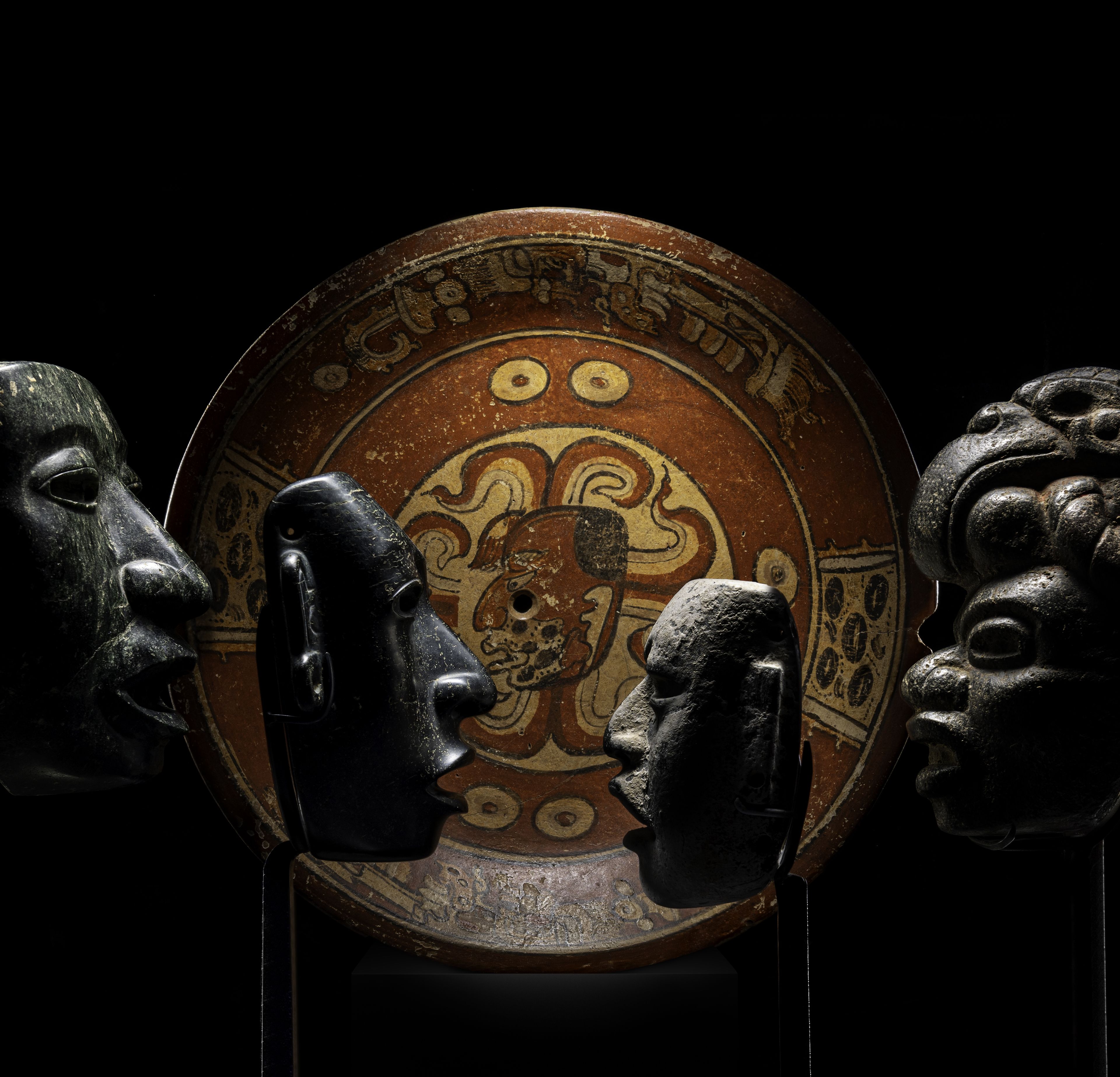
Hindman is pleased to present our Pre-Columbian & Ethnographic Art auction this October 12 featuring 197 exceptional lots that encompass ancient Central and South America, as well as a diverse array of tribal art from across the globe. Join us in exploring a timeline of abstract expressions across Central and South American cultures. Olmec (1200 - 400 B.C.): The Olmec civilization, often regarded as the "Mother Culture" of Mesoamerica, left behind enigmatic art forms marked by abstract symbolism. Their colossal stone heads, characterized by exaggerated facial features and intricate headgear, exhibit an abstract representation of powerful individuals. The intricate designs often carved in jade also showcase abstraction through the transformation of human to animal features, hinting at a deeper spiritual connection. An Olmec Jade Transformation Figure Mezcala (300 - 800 B.C.): The Mezcala culture's artistry revolves around abstract minimalism. Their stone sculptures, primarily small figurines, emphasize simplified geometric shapes that transcend specific human features. These sculptures often portray elongated bodies and smooth, polished surfaces, reflecting a fascination with form and symmetry. The Mezcala people's abstraction focuses on essential characteristics, encouraging contemplation of the universal rather than the individual. A Mezcala Green Stone Seated ‘Stargazer‘ Maya (200 - 900 A.D.): The Maya civilization is renowned for its intricate hieroglyphs and breathtaking architecture, but their art also embraces abstraction in a distinctive way. Maya murals and pottery employ a complex visual language that blends human and divine elements, often merging into abstract representations. Their glyphs and motifs intertwine to form narratives of the cosmos, bridging the gap between the concrete and the metaphysical in an abstract tapestry of meaning. A Maya Polychrome Plate with Deity and Glyphs Teotihuacan (100 - 750 A.D.): Teotihuacan's artistic legacy is marked by a masterful fusion of abstract symmetry and grandeur. Beyond its iconic monumental architecture like the Pyramid of the Sun and the Pyramid of the Moon, Teotihuacan is known for its intriguing stone masks, exemplifying their unique approach to abstraction. These masks, carved with meticulous precision, convey both human and divine features in a harmonious blend. The deliberate arrangement of elements in these masks illustrates the Teotihuacan people's commitment to abstract representation. Furthermore, the geometric patterns adorning Teotihuacan's murals and ceramics reveal a society deeply attuned to cosmic order. A Teotihuacan Stone Mask Valdivia (3500 - 1800 B.C.): The Valdivian culture, originating in present-day Ecuador, presents a unique abstraction through its ceramic art. Their pottery showcases abstract facial features with elongated eyes and noses, highlighting a departure from naturalistic representation. The Valdivian people's abstract expression is perhaps most evident in their anthropomorphic figurines, where the manipulation of proportions and features transcends the mundane into the mysterious. A Valdivian Stone Figure
Hindman invites you to step into The Collected Home this October, featuring star selections from our monthly auction series. As a novice collector or interior designer, dive into a world of approachable, unique finds. Please note that our Collected Home auction series is in a Timed Online format. Don't wait to snag your favorites, lots begin to close for this month's edition at 10 AM CT this Wednesday, October 11. Featured Selections: Glass Sculpture A Pair of Bernhardt Mother of Pearl Veneered Side Tables A Pair of Chinese Export Porcelain Jardinières with Wood Stands A George III Style Scalamandré-Upholstered Wingback Armchair Untitled (No. 8) (from Iron Butterfly), 1968 A Heriz Wool Rug A Kelly Wearstler-Designed Strada Chandelier Five Framed Hand-Colored Engravings Depicting Mineral and Shell Specimens
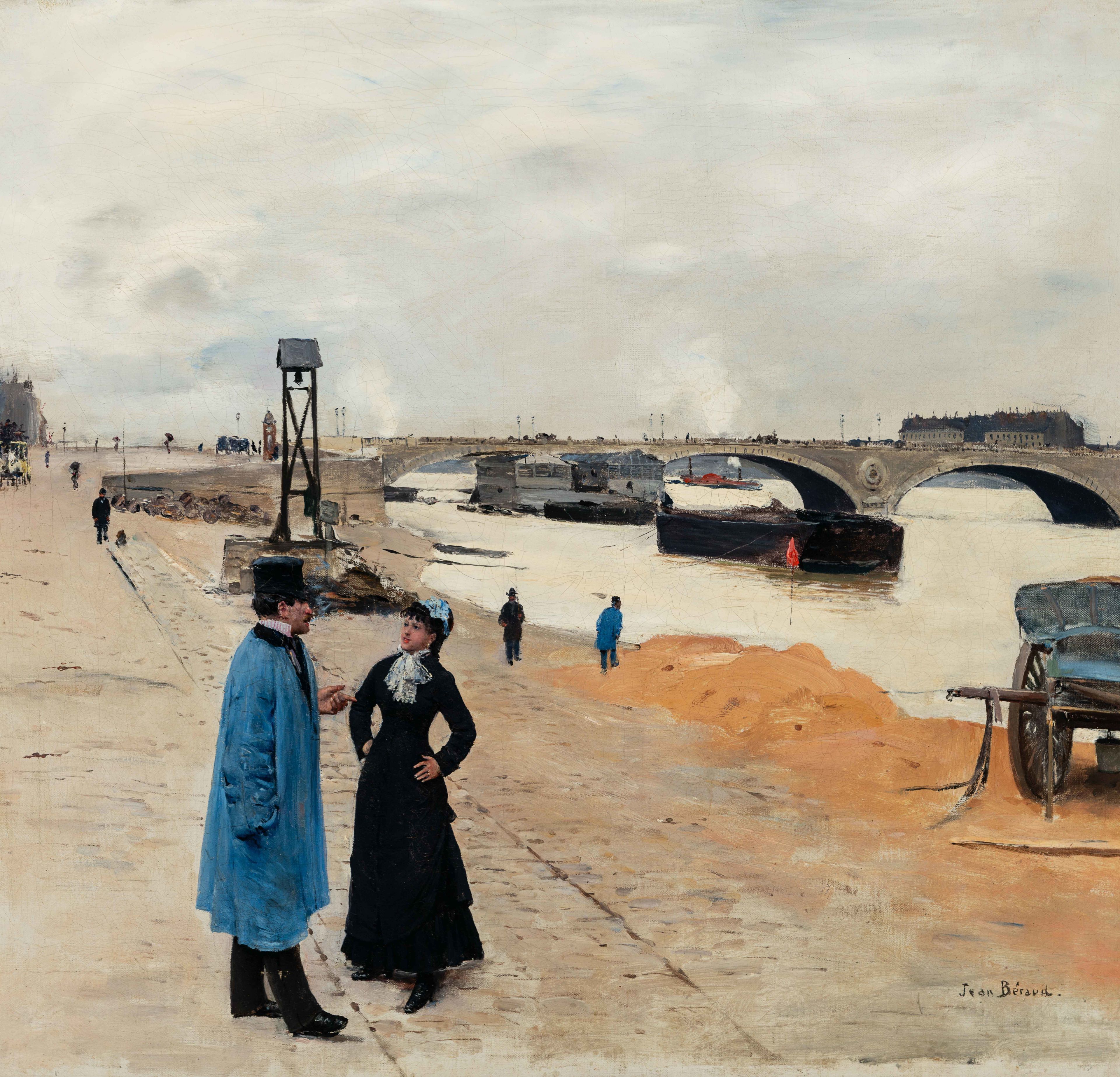
Described as "a sophisticated Parisian who knows where to go and has the gift for observation," Jean Béraud captured in his lively paintings the grand boulevards and stylish denizens of Belle Epoque Paris. Originally trained as an Academic artist, early in his career Beraud was influenced by the Impressionists, with their quick brushstrokes and urban themes. He was a close friend of Edouard Manet and frequented the same cafes as Edgar Degas, Pierre Renoir, and Henri de Toulouse-Lautrec. Like them, Béraud sought to objectively convey the modernization of Paris caused by Baron Hausmann's physical reconfiguration of the city. Le Pont de Bercy displays Béraud's talent for depicting everyday life in Paris without sentimentality or picturesqueness. A man in a blue working smock converses with a smartly but soberly dressed woman. They stand on the banks of the Seine at Bercy, upstream from Paris. Originally a small, separate commune, Bercy was annexed in 1860 by the Second Empire. By the 1870s, it was developing into a residential and commercial quarter of Paris. Behind the couple can be seen the Pont de Bercy, completed in 1864, with a steady stream of traffic. Barges placidly float on the river and an idle work cart stands at the ready along the still incomplete river embankments. From the Impressionists, Béraud also developed an interest in Japanese ukiyo-e prints, with their asymmetrical compositions. In the present work, elements of the Eastern art form can be seen in the artist's use of large expanses of empty space punctuated by dark figures, as well as the diagonal lines of the bridge and tram lines cutting across the canvas. The candid grouping of the couple, off-center focus, and deep perspective, likewise owe something to the new art of photography pioneered by Nicéphore Niépce, Daguerre, and Fox Talbot. Béraud was known to sit and sketch in a hired carriage for hours in order to capture spontaneous fragments of the city's life, as if he himself was a roving camera. In both its subject matter and compositional structure, Le Pont de Bercy reveals the artist as one of the great nineteenth-century painters of modern life. Featured: Lot 34 | Jean Béraud (French, 1849-1936) | Le Pont de Bercy, c. 1880 | Estimate: $120,000 - $180,000
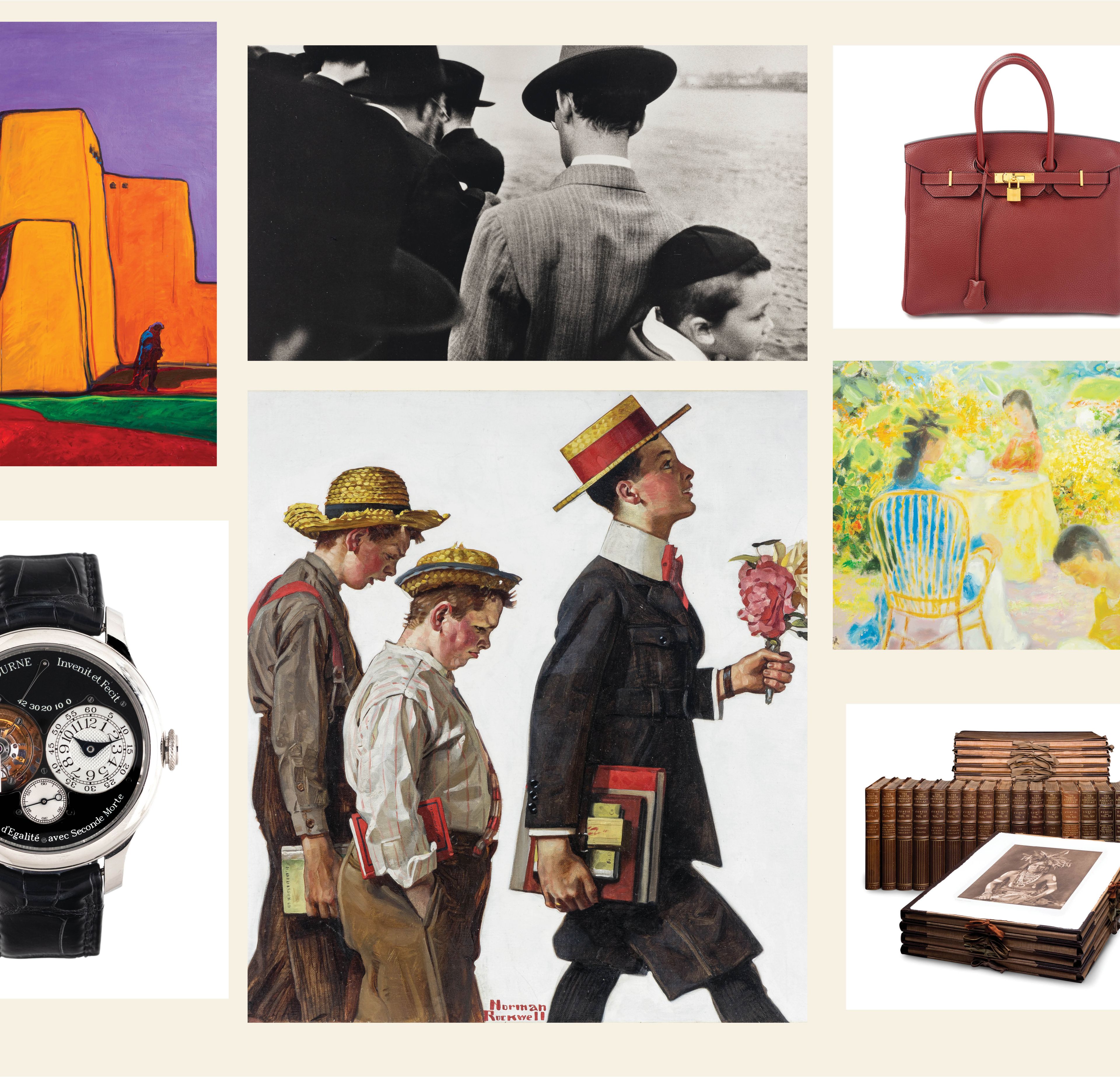
As we kick off a robust fall season at Hindman, I am pleased to present selections from our upcoming auctions that both entice and delight. Explore our New & Noteworthy blog every quarter for an eclectic mix of property from our 52 collecting categories. Within my role as Deputy Chairman, I hope to showcase the breadth and depth of all Hindman has to offer. Sincerely, Featured Auctions: Fall Fashion & Accessories | Lots Begin to Close October 3 American Furniture, Folk & Decorative Arts | October 4 European Furniture & Decorative Arts | October 10 Pre-Columbian & Ethnographic Art | Lots Close October 12 American Art | October 17 European Art | October 17 Time & Space: Watches from the Collection of Glen de Vries | October 18 Forever Young: Photographs from the Joe Baio Collection | October 19 Canvas & Clay: The Collection of Judith and Philip Sieg, Bellefonte, Pennsylvania | October 26 Western & Contemporary Native American Art | November 1 Fine Books from the Dorros Family Collection | November 9
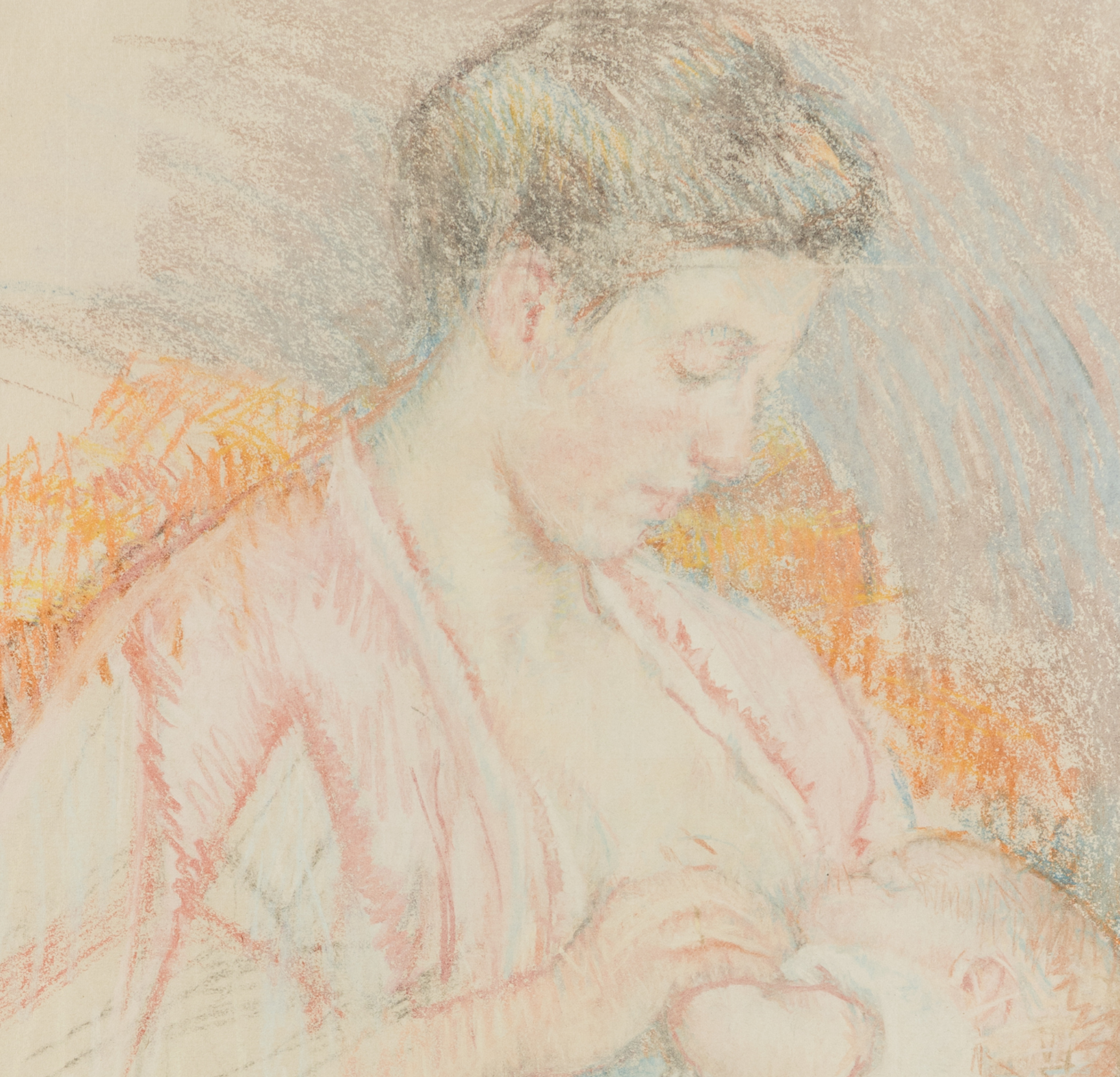
Hindman is pleased to present the work of Mary Cassatt in our American Art auction this October 17. To learn more about her technique and the variety of her artistic practice, explore below! In addition to her extensive work in oil, Mary Cassatt also excelled at the printed medium, especially favoring etching and drypoint and ramping up her production during the 1890s. Her Parisian dealer, Ambroise Vollard, became instrumental in her interest in printmaking. He noticed the high appeal of prints, which were perceived as a bridge between fine art and popular trends, and saw an opportunity: while large productions of prints would sell well, he insisted on connoisseurship and artistic vision as well. It is no surprise, then, that Vollard also championed Cassatt’s production of pastel counterproofs, approximately between 1889 and 1913. A counterproof is created by applying a damp sheet of paper to the surface of a work in pastel before rubbing or running it through a press, resulting in a mirror image of the original. It is not an exact mirror, however, since the image is rendered in flatter and softer tones. The pastel medium, which fell out of favor with the advent of Romanticism, became fashionable again with the Impressionists, as it allowed for subtle palettes and airy visual effects. Renoir and Degas, Cassatt’s close friend, are also known to have produced pastel counterproofs. In 2004, Adelson Galleries curated “Art in a Mirror,” a landmark exhibition of Cassatt’s pastel counterproofs, shedding light on this little-known medium and practice by the artist. The exhibition recorded more than 130 counterproofs, from 67 pastels, and a substantial number of counterproofs are believed to be the only remaining trace of the original pastel. Among the counterproofs offered here, only Young Woman Reflecting (lot 55) and Head of Adèle (No. 4) (lot 58) are from known pastels listed in the Breeskin catalogue raisonné, while the rest are from pastels that are unaccounted for. Though technically derived from pre-existing original works, Cassatt’s counterproofs are arguably works of art in their own right, not mere reproductions. Jay E. Cantor, in his essay “Vollard is a Genius in his Line” published in the Adelson exhibition catalogue, speculates that she likely viewed the medium as a worthy creative experiment: the counterproofs “offered an occasion for innovative reworking. Since the image was reversed, it became, in effect, an entirely different and original work to be confronted on its own term” even though “there is no clear evidence of the degree to which [they] may have been used in this way.” (p. 18). Stylistically, the counterproof process further flattened the image and amplified the evocative, subdued, ethereal tones already displayed in the pastel works. These features, reminiscent of the symbolist aesthetic of the time, especially in the Vollard circle, make Cassatt’s counterproofs a distinct body of work within her oeuvre. The imagery of motherhood and early childhood is recognizably personal to Cassatt, and the present selection offers a glimpse into her characteristic handling of the subject. As argued by Pamela Ivinsky in her “After Impressionism: Cassatt’s Counterproofs and her Later Career,” also featured in the exhibition catalogue, her rendering of motherhood emphasizes its engrossing element, with the use of the profile and of the maternal gaze directed at the child, not at the viewer. It is a depiction imbued with utmost sensitivity and intimacy, making the maternal bond intangible, nearly lost to viewers as it resides strictly in the space shared by the absorbed mother and her child. The immaterial depth of the maternal bond reflects the diaphanous aesthetic of the image, coalescing in one gesture the narrative and artistic elements of Cassatt’s work. Featured: Lot 1053 | Mary Cassatt(American, 1844-1926) | Mother Jeanne Nursing Her child (Profile Left) (No. 3), c. 1908 | Estimate: $20,000 - $30,000
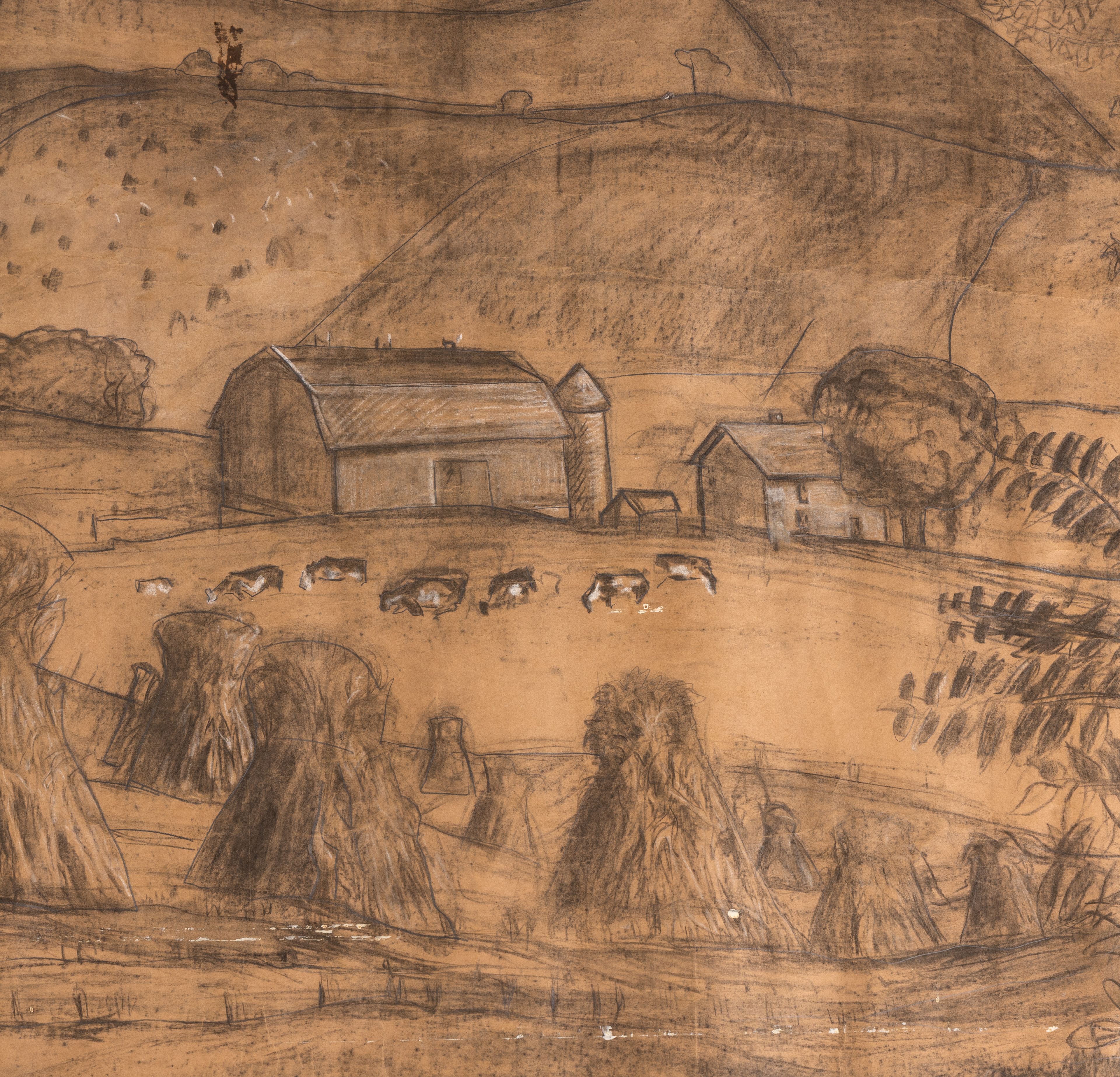
Hindman is pleased to present Wisconsin Farm Scene (Study) by John Steuart Curry this October 17 in our American Art auction. Scroll to learn more about this work's unique history in the American canon of art. The present lot is a to-scale study for a three-part mural for the First National Bank, Madison, Wisconsin, painted in 1941. Curry had previously established his artistic reputation as a regionalist, along with Thomas Hart Benton and Grant Wood, in Kansas before he was lured to Madison in 1936 for the position of artist-in-residence at the University of Wisconsin (the first such post in the country). The hire came under the auspices of the College of Agriculture with the goal of using his work to educate rural communities and promote state-of-the-art farming practices. Lot 1036A | John Steuart Curry (American, 1897-1946) | Wisconsin Farm Scene (Study), c. 1941 | Estimate: $10,000 - $15,000 It was during his tenure in Madison (1936-46) that he created the study and the finished mural for the First National Bank. As a regionalist artist, Curry strove to create a universal art with his depictions of local landscapes and events with which the public could identify. The impressive scale of the study allows for an expansive view of a bucolic Wisconsin landscape that features orderly haystacks, prosperous farms, and healthy cows. The complete mural also depicted a panoramic view of Madison with its lakes and capitol, as well as smaller side panels that showed fall birds and crops. The painted mural panel of the same scene is now in the collection of the Chazen Museum, University of Wisconsin, Madison.
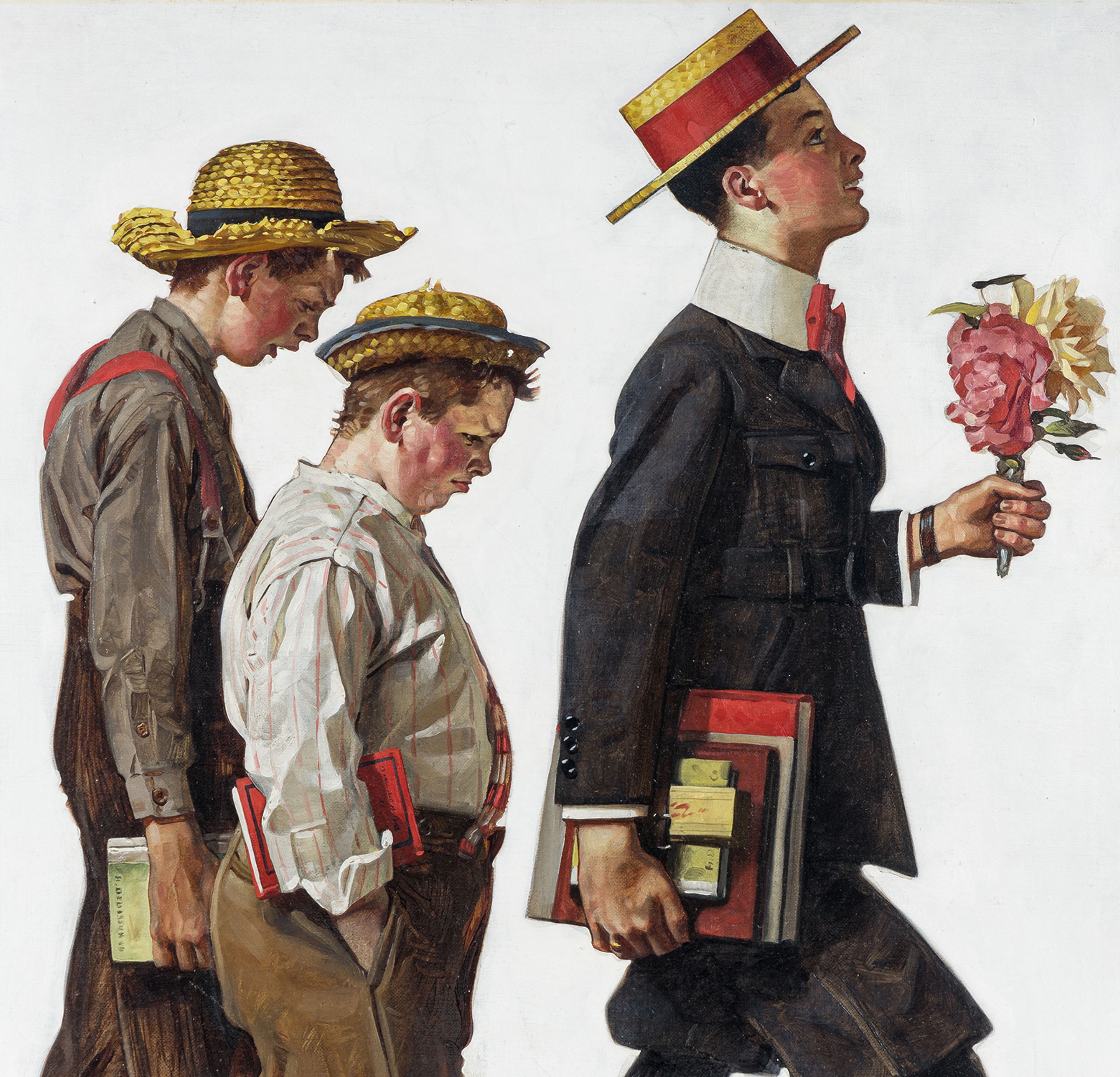
Hindman is pleased to present One More Week of School and Then..., 1919 by Norman Rockwell in our October 17th American Art auction. Explore an example of Rockwell's iconic style below. Lot 1048 | Norman Rockwell (American, 1894-1978) | One More Week of School and Then..., 1919 | Estimate: $300,000 - $500,000 Painted in 1919, when Norman Rockwell was just 25 years old, Only One More Week of School and Then… was made for the June 14th cover of Country Gentleman. Although the young artist would go on to create covers for Life Magazine and The Saturday Evening Post throughout his career, he only produced paintings for Country Gentleman from 1917 to 1922. These playful covers centered around the adventures (and misadventures) of Cousin Reginald Claude Fitzhugh, a know-it-all city boy, and his country cousins, Chuck Peterskin and the spirited Doolittle brothers. The characters were first introduced in the magazine's August 25, 1917, issue, with Cousin Reginald usually depicted as the unwilling butt of his cousin’s practical jokes. Only One More Week of School and Then… represents Rockwell’s light-hearted, charming narratives featuring children. Rockwell’s ability to render the universally understood emotions of young boys, ranging from misery to delight, is on full display here. The upturned, sprightly face of brown-nosing Reginald, who firmly carries in one hand his schoolbooks and with the other, a bouquet for Teacher, contrasts sharply to the downcast, petulant demeanors of his bumpkin cousins, who are miserable at the thought of another week of school before summer vacation. The next and last painting in the series after the present work, Vacation!, swaps the emotions of the boys, with a despondent Reginald trailing behind a jubilant Tubby and Rusty. Completed early in the artist’s career, the present painting also demonstrates the more expressive and painterly execution that characterizes Rockwell’s work from the late 1910s to early 1930s, before he adopted photography into his technical process. Even without the aid of a camera, the naturalistic detail with which the three boys are carefully rendered–from Reginald’s immaculate suit to the tattered straw hats of the other two boys—reveals the artist’s ability to capture the varied glory of America’s youth. Through these keen observations, Rockwell created scenes that resonated with his audience, and what ultimately made him one of the most commercially successful artists of the 20th century.
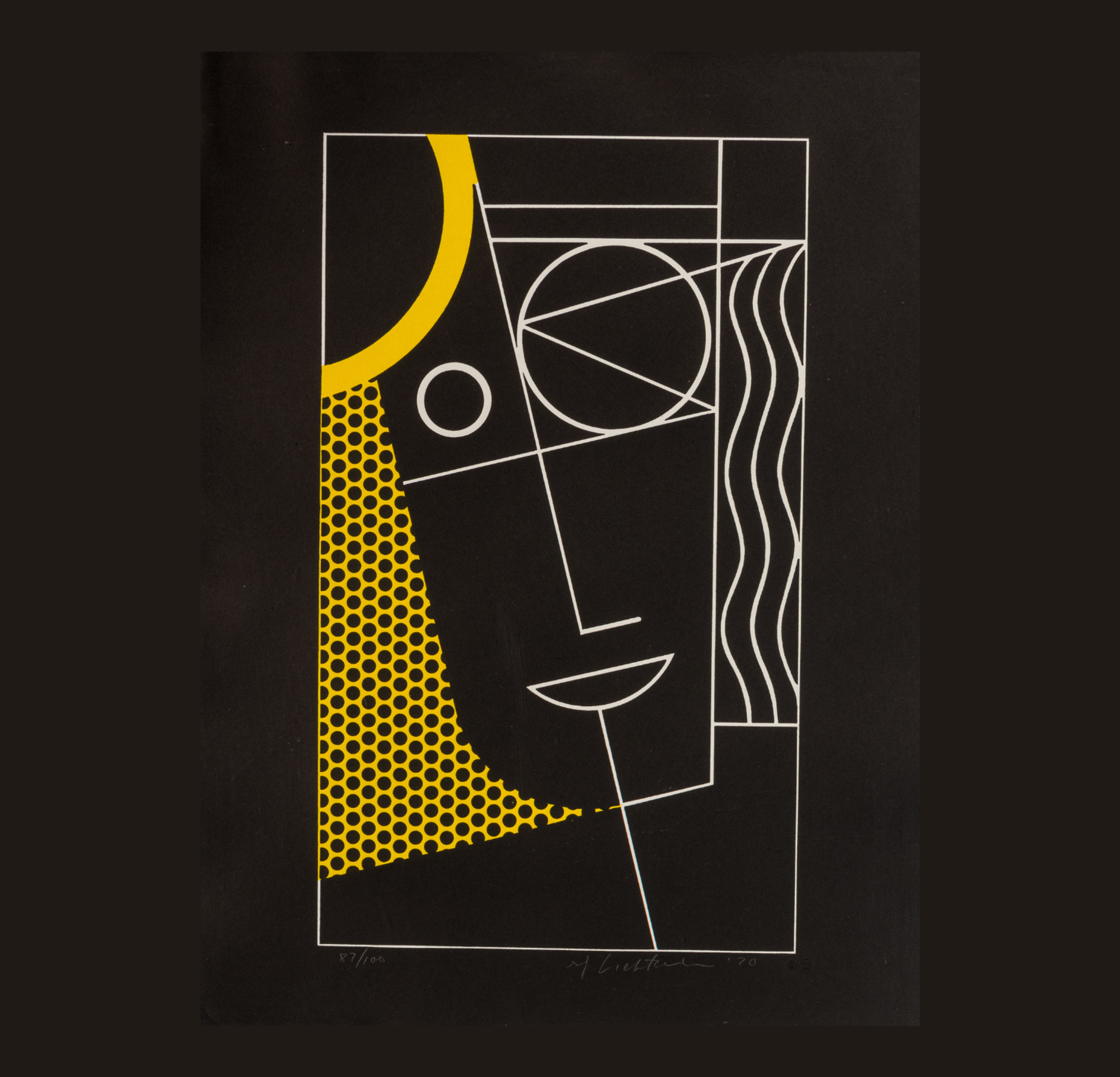
Hindman is excited to offer works from the Collection of Dr. And Mrs. Herbert Gursky in our Prints & Multiples auction this September 21. The quality and breadth of the seventy-two lots presented here is a testament to the passion that Herbert and Flora Gursky had not only for collecting but also for their life and work. Dr. And Mrs. Herbert Gursky Flora Gursky, born in Brooklyn, New York, was a graduate of Brooklyn College and Columbia University. While at Columbia, majoring in Biology and Marine Biology, she met and went on to marry Dr. Herbert Gursky in 1958. Herbert was lecturing on Physics at the time that he met his future wife and surely their keen interest in science and curiosity for all things around them helped to fuel their passion for modern art. Lot 27 | Cy Twombly (American, 1928-2011) | Roman Notes II, 1970 | Estimate: $40,000 - $60,000 Dr. Gursky completed his PhD in Physics at Princeton University in 1958 and became one of the most respected astrophysicists of his time. His primary research interests were in the area of X-ray astronomy. Importantly, in 1961, he was a member of the group in Cambridge, Mass, that made the discovery of cosmic X-ray sources. From there he went on to be a leader in his field, not only through his research, but also through his ‘ability to distill and seize the most important nuggets from any research program and envision its application to a variety of new problems and directions.’[1] Lot 31 | Josef Albers (American/German, 1888-1976) | A group of four prints from Die Oberfläche (Attic; Silent; Opalescent; Chrysoprase), 1965 | Estimate: $6,000 - $8,000 It is no surprise, when looking at the collection, that minds such as Flora’s and Herbert’s would find the universe of Modern art so intriguing. Their collection reads as a roster of the great artists of the Modern era from the minimalist approaches of Frank Stella and Josef Albers to the defined California aesthetic of Ed Ruscha and Wayne Thiebaud; from the Abstract Expressionism of Willem de Kooning and Pierre Soulages to the fantastical landscapes of Enrico Baj, Claes Oldenburg, and Niki de Saint Phalle. Many of these artworks, when first acquired, were by little-known artists who became memorialized in the canon of art history well after Gursky’s acquisition. There is a true passion for art, a deep knowledge of its past and present, and a mark of keen connoisseurship present in the Gursky’s well-curated collection which we are honored to present here. [1] Doschek, George; Dahlburg, Jill, “Obituary: Herbert Gursky, 1930-2006,” Bulletin of the American Astronomical Society, December 2007, v.39, no. 4, p. 1060. Featured Image: Lot 19 | Roy Lichtenstein (American, 1923-1997) | Modern Head #2 (from the Modern Head series), 1970 | Estimate: $10,000 - $15,000
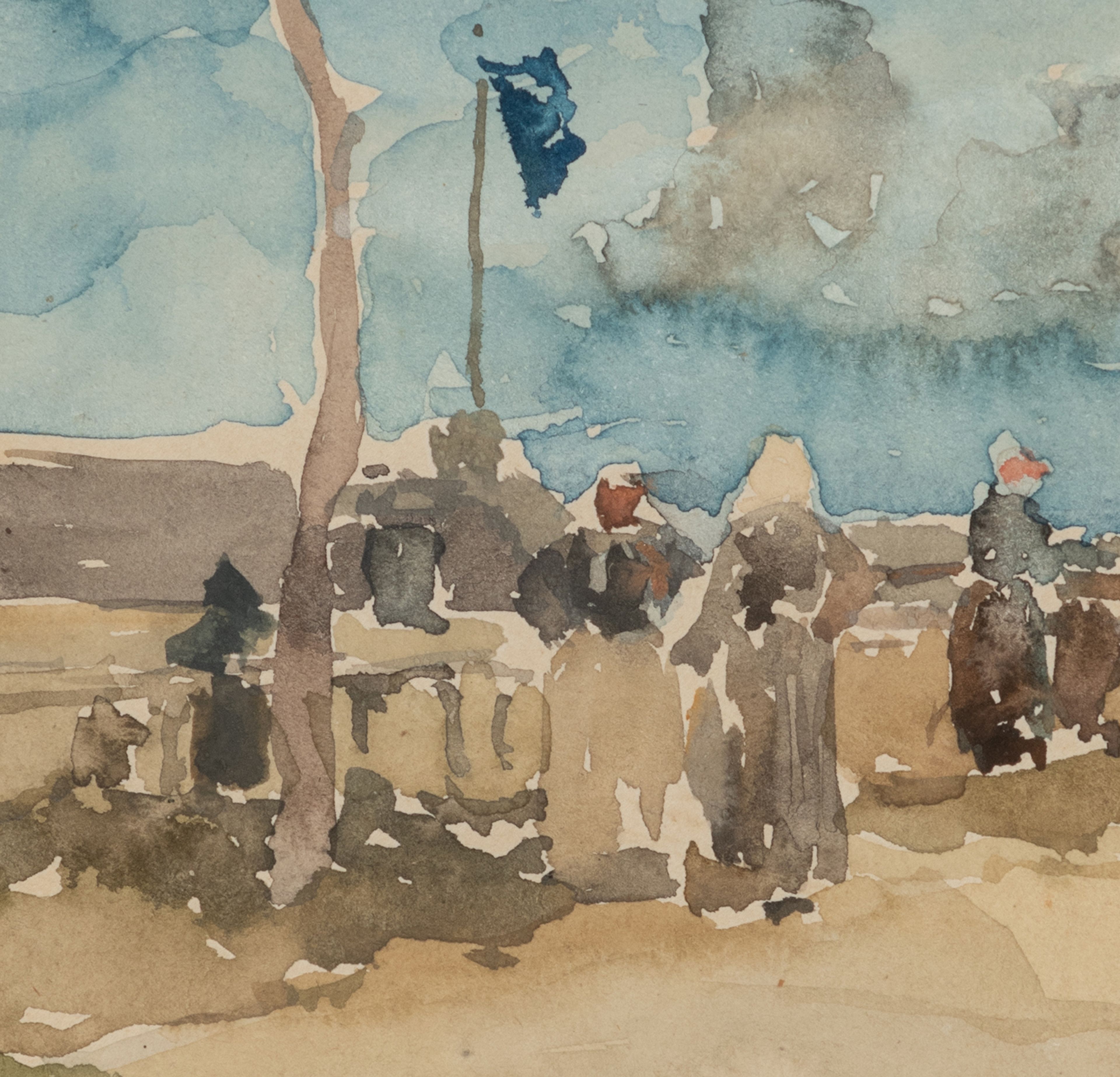
Hindman is proud to announce its first New York auction season, anchored by single-owner sales across fine art, design, and luxury. These inaugural New York sales expand on Hindman’s impressive presence across the United States, serving a global buyer base. Hindman will present the auctions at 21 Greene Street in Soho from October 18-26. Gemma Sudlow, Managing Director, New York Region commented: “We are honored to be entrusted with these prestigious New York and East Coast collections at Hindman. Each sale boasts magnificent examples of works built by passionate collectors who were inspired by a myriad of different disciplines and styles. Our New York season sales are a testament to Hindman’s commitment to delivering a full-service suite of offerings for clients in the Northeast.” Since launching Hindman New York last October, Sudlow and the team have grown to include specialists across multiple collecting categories and have held several special exhibitions and partnerships with High Line Nine Galleries, The Winter Show, Carolina Herrera, and Sterling | Boos. Time & Space: Watches from the Collection of Glen de Vries | October 18 Time & Space: Watches from the Collection of Glen de Vries encompasses more than 100 watches and 30 watchmakers from the collection of this trailblazing entrepreneur, displaying de Vries’ passion for science, space, aviation, and speed. The sale features watches by top manufacturers including F.P. Journe, Richard Mille, A. Lange & Söhne, De Bethune, Patek Philippe, Urwerk, Audemars Piguet, Hublot, Vacheron Constantin, and H. Moser & Cie. __________ Forever Young: Photographs from the Joe Baio Collection | October 19 The following day, Hindman will offer Forever Young: Photographs from the Joe Baio Collection, featuring a stunning selection of 101 photographs from the collection of Joe Baio, one of the most extensive and notable private photography collections in the world. Baio has collected photography since the mid-80s, focusing on the theme of childhood and adolescence, inspired by raising and photographing his own children. Today, nearly every available inch of the 2,100 square-feet of wall space in Baio’s legendary New York apartment is filled with a photograph from his 6,000-piece collection. It includes examples from the dawn of the medium by pioneers such as Nadar and Julia Margaret Cameron, to modern and contemporary works by artists such as Diane Arbus, Henri Cartier-Bresson, Bruce Davidson, Robert Frank, LaToya Ruby Frazier, Sally Mann, and Angela Strassheim. __________ Canvas & Clay: The Collection of Philip and Judith Sieg, Bellefonte, Pennsylvania | October 26 Canvas & Clay: The Collection of Judith and Philip Sieg will be offered on October 26. Over the course of their lives, Judith and Philip Sieg amassed an enviable selection of fine art and modern pottery, headlined by significant pieces from some of the most important American artists of the late 19th and early 20th centuries and an almost encyclopedic overview of Scandinavian studio pottery. Highlights from the fine art session includes works by Charles Prendergast, James Abbott McNeill Whistler, Albert York, Claudio Bravo, and Bill Traylor. In addition to fine art, the Siegs were avid collectors of modern pottery. Notable artists featured include Wilhelm Kåge, Lucie Rie, Bodil Manz, Alev Siesbye, and Gertrud Vasegaard.
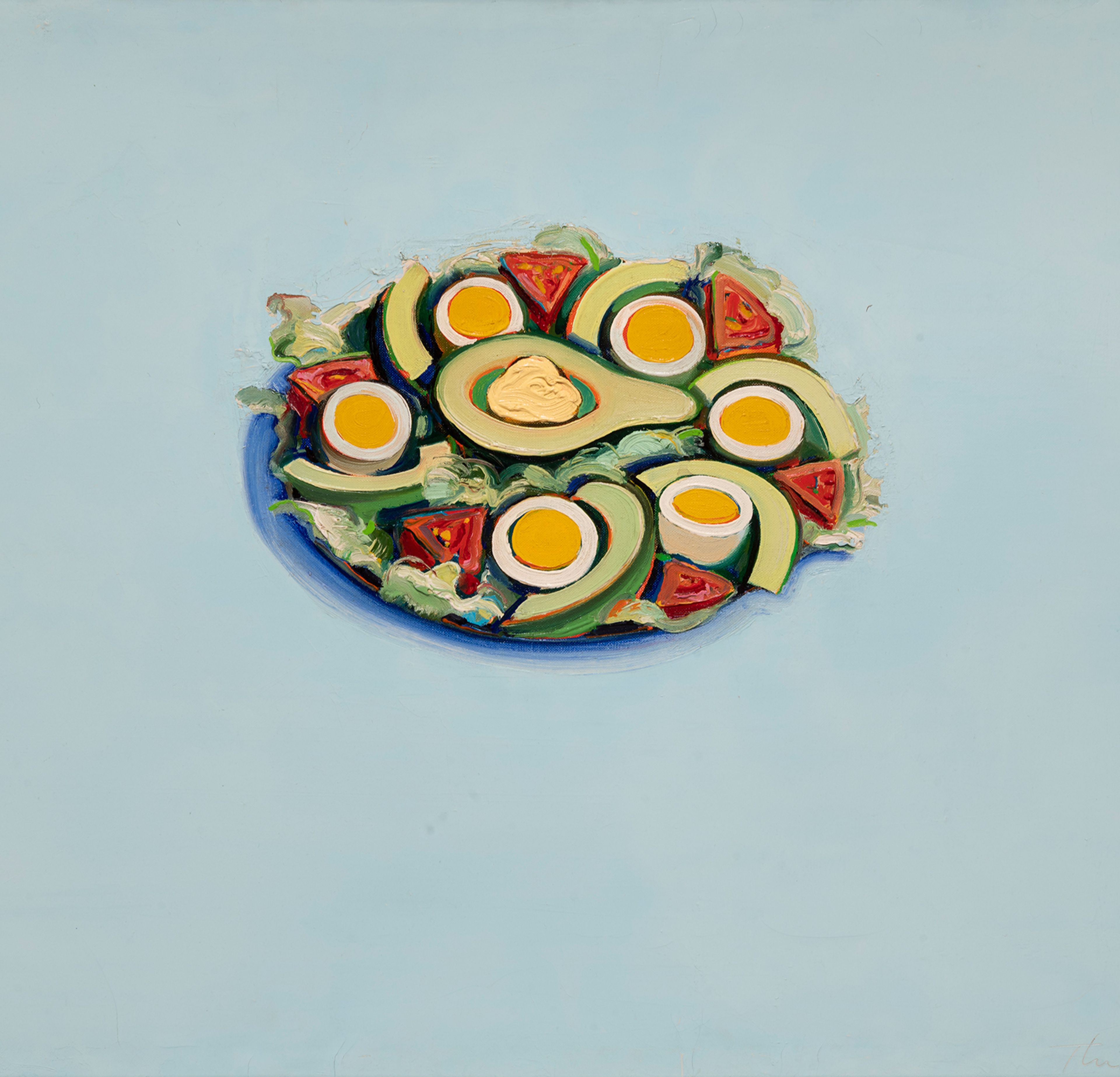
Hindman is pleased to present Wayne Thiebaud's Avocado Salad in our September 28th Post War & Contemporary Art auction. This work comes to Hindman from the Estate of Morton and Estelle Sosland, Kansas City, Missouri. Join us in exploring the couple's legacy as collectors and patrons of the art world. Morton and Estelle Sosland Morton and Estelle Sosland were two well-known patrons of the arts in Kansas City, donating and serving on the boards of several art organizations including the Kansas City Symphony, Kansas City Art Institute, and the American Crafts Council. But perhaps no institution drew their attention and passion as much as the famed Nelson-Atkins Museum of Art. Both were heavily involved with the museum serving on the board, organizing donation drives, and helping guide the museum’s expansion. In 1994, the Soslands donated the massive 17-foot shuttlecock sculptures that adorn the sculpture park at the museum. Although somewhat controversial at the time, the sculptures have become iconic and are among the most photographed art installations in the city. While both were involved with the Nelson-Atkins, it was Estelle who formed the closest bond with it, starting as a volunteer in the Sales and Rental department before eventually rising to the position of chairman, the first woman ever to hold that position. She served on numerous boards including Menorah Medical Center, the Oppenstein Brothers Foundation Disbursement Committee, and the board of Sunset Hill School. Morton Sosland made his living in the publishing business where he served as publisher and editor for many publications but most notably Milling & Baking News. He also served on many high-profile boards of companies with significant Kansas City ties including H&R Block, Commerce Bancshares, ERC Corporation, Hallmark Cards, Kansas City Southern Industries, Stilwell Financial, and Trans World Airlines. Much like his wife, Morton also had a deep passion for the art community and the Nelson-Atkins in particular, serving several key positions at the museum. Over the course of 73 wonderful years of marriage, Morton and Estelle built a remarkable life for themselves in their hometown of Kansas City that saw three children, four grandchildren, and six great-grandchildren. From a very young age, the Soslands learned that giving back was important, starting the charitable Sosland Foundation in 1950 while both were just 25 years old. Their impact on the Kansas City community was so profound that in 2014, Mayor Sly James proclaimed September 19 Morton and Estelle Sosland Day. Not surprisingly for a couple so passionately involved in the art world, they also assembled an enviable collection of painting, sculptures, and other pieces of fine art. No doubt inspired by Morton’s publishing business, the Soslands favored food-related subjects in their collection. This is especially apparent in the delicious pieces offered in this auction, including William H. Bailey’s Eggs and Oranges, Claes Oldenburg and Coosje Van Bruggen’s B B Pie a la mode - Flying Scale B 3/3, and, of course, Wayne Thiebaud’s incredible Avocado Salad.
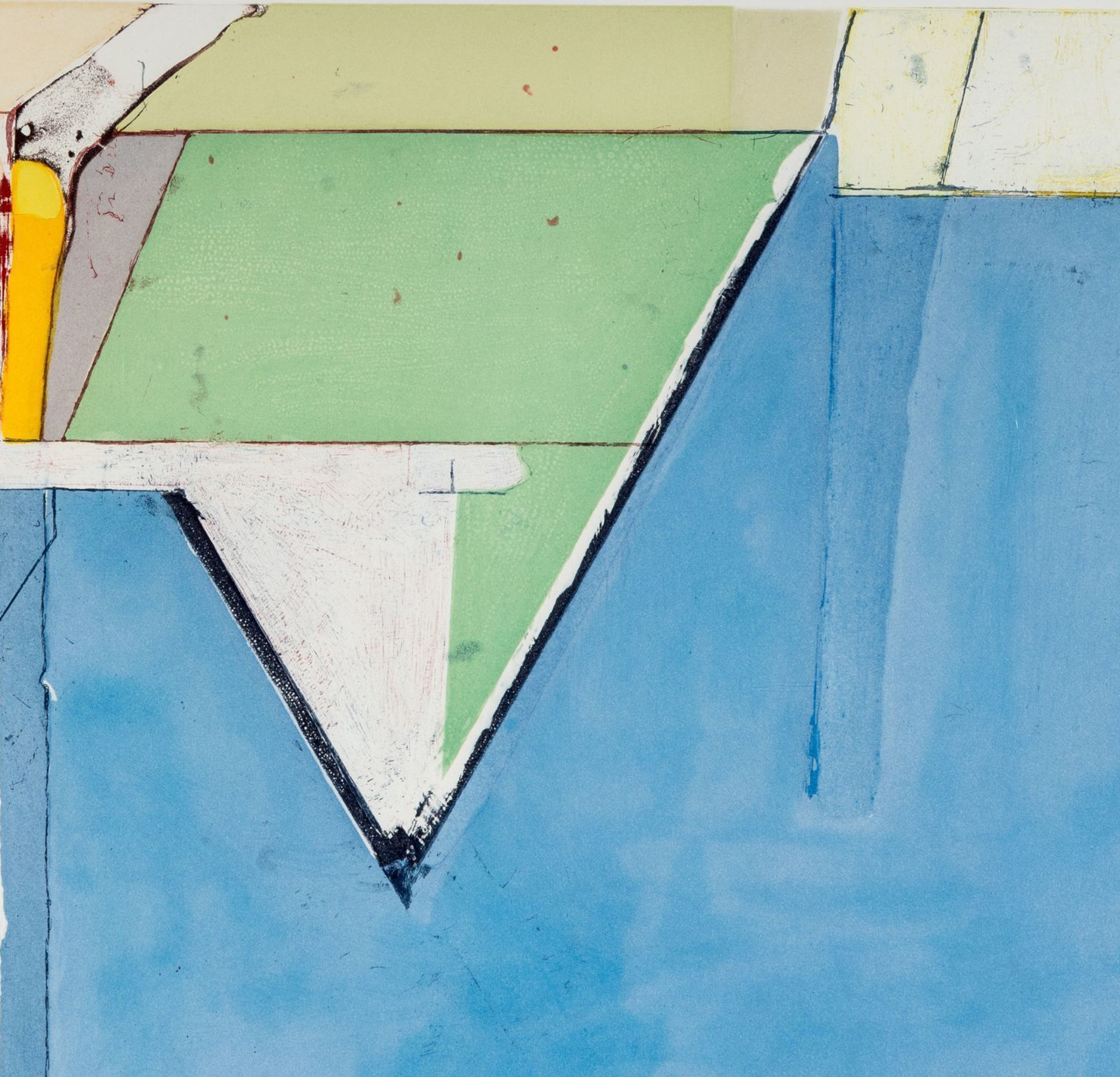
Hindman is pleased to present High Green, Version II, 1992 by Richard Diebenkorn this September 21st in our fall Prints & Multiples auction. Richard Diebenkorn (1922-1993) is most well-known for his large-scale, abstract paintings of carefully arranged geometries in mostly vertical compositions, balancing line, color, and space in the service of his particularly Californian light. Through the application of different printmaking methods, Diebenkorn’s prints allowed him to continue to build upon these themes, on a smaller scale. This is clear in High Green, Version II, 1992, a color aquatint with etching and drypoint. Printed by Kathan Brown at Crown Point Press, San Francisco—with whom Diebenkorn collaborated since he began to explore printmaking in 1961— High Green, Version II emphasizes a satisfying composition reflective of Diebenkorn’s purposeful employment of varied linemaking, balanced forms, and concentrated application of color emblematic of his mature career in the year prior to his death. Born in 1922 in Portland, Oregon, Diebenkorn grew up San Francisco and spent most of his life in California. He worked for much of his career as a teaching artist in various universities such as University of California, Los Angeles and the University of Southern California. Diebenkorn had a wide range of artistic influences from Paul Cézanne and Henri Matisse to Hans Hofmann, to Abstract Expressionism, then well in-vogue on the East coast. However, rather than copying any past or concurring style, Diebenkorn synthesized what interested him into a practice uniquely his own. This culminated in his most well-known series, Ocean Park, beginning in 1967: it features architecturally-balanced abstract compositions dependent on his environment—a celebration of the constant light flooding into his Santa Monica studio. In 1988, Richard and his wife, Phyllis, moved to Healdsburg in northern California where he would remain for the rest of his life. In 1989, Diebenkorn had open heart surgery, after which his health was never quite the same, though his creativity and practice did not falter. He subsequently devoted an even greater amount of time to printmaking in 1991 and 1992 because of the smaller, more manageable, physical scale that printmaking entails and especially given he could offload the most physically rigorous element—the printing itself—to the highly skilled Crown Point team.[i] As seen in High Green, Version II, Diebenkorn was able to use printmaking to his advantage in its elements of unpredictability and range of mark making, including the washes of color achieved through aquatint, to balance his compositions. High Green, Version II is an aerial map of inorganic shapes defined by contour lines and blocks of color. The majority of the composition is awash in soothing, undulating blue, bordered by smaller bands of color and line—greens, yellows, purples, and reds at the top and blacks and grays at the bottom—delineated by the natural edge of the plate to create the white border. The work is inhabited by mostly linear forms defined by various methods—from thick contour lines along edges to short scratches used to apply texture within color fields—such as the gray segment at the bottom right— to drops of aquatint wash in pale blue and pink. Diebenkorn was enchanted with the challenge and occasional unpredictability that printmaking allowed. As he told his daughter at Crown Point’s studio in 1992: “I’m making my drawing in spite of the metal. There are unseen forces there, and it’s always a competition with them. I think I’m going to make a straight line, and it says, ‘Oh no you don’t!”[ii] The stimulating limitations within printmaking nevertheless also allowed for the freedom of reworking the plate to perfect the desired effect, as shown here in this second state of High Green. With his mostly straight edges, the eye is drawn to the one curvilinear form coursing through the center of the composition. Diebenkorn had noted that he was prone to placing more emphasis on intensity in the upper sections of a composition—a more “concentrated” and colorful space—before balancing this field of activity with a “less charged” space.[iii] This print thus emphasizes a spatial hierarchy yet still achieves harmony because there is no tonal hierarchy. The lack of depth achieved by the washes of color allows the eye to glide evenly over the print—particularly the curved line marking the shift from concentrated color at the top to neutral blacks, grays, and whites. Though more subdued in terms of color and activity, the forms of the lower half of the print balance the top through their echoing of the shapes and lines above—such as the white and green inverted triangle at the top repeated below through the white lines over the blue field tapering towards a V across the lower edge of the plate. Meanwhile, the pure expanse of the blue extending to the right edges acts as a calming field balancing the busy left edge. The overall effect is one that continually engages the viewer in this meditative repetition of shapes, variation of line, and soothing color palette—a distillation of Diebenkorn’s lifelong exploration of light and form mediated through printmaking. [i] Kathan Brown, Ink, paper, metal, wood: Painters and Sculptors at Crown Point Press (San Francisco: Chronicle Books, 1996), 24. [ii] Ibid., 20. [iii] Jane Levinson and Andrea Liguori, Richard Diebenkorn: The Catalogue Raisonné, volume 4 (New Haven: Yale University Press, 2016), 193.
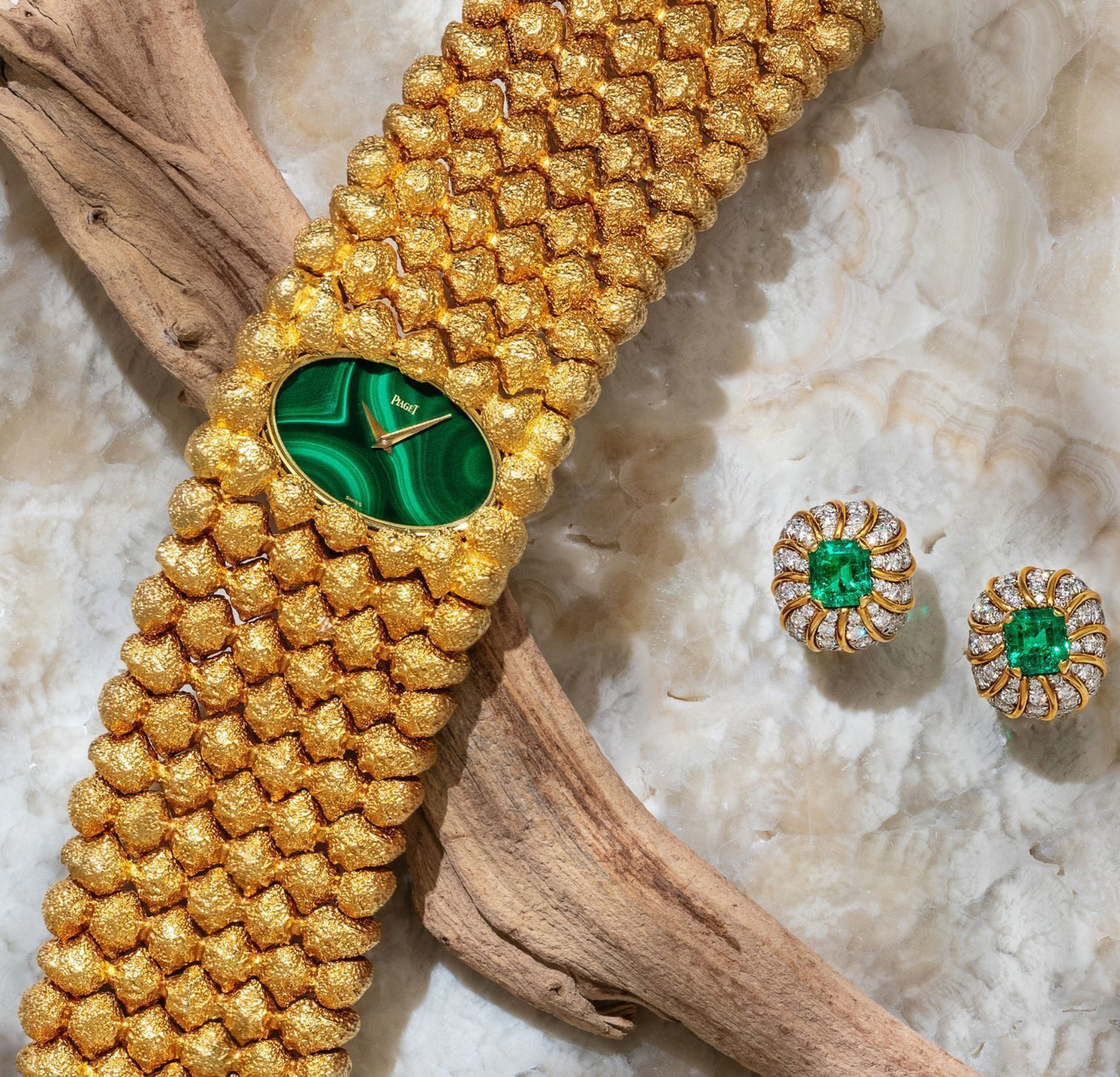
From iridescent pearl earrings to dazzling gold bracelets, necklaces, and rings, treat yourself to unique jewelry this September 12 from Hindman's Important Jewelry auction. Explore selections perfect for an evening cocktail party, the board room, and beyond. Lot 45 – Elegant in Coral Add a pop of bright color to an evening gown or suit with this pair of coral and diamond earrings. These pear-shaped coral drops sparkle and shine against a backdrop of diamonds. Lot 47 – Life’s A Beach….or a Shell This whimsical Verdura brooch features diamonds, turquoise, cultured pearl, and shell in its design, adding both texture and sparkle to any ensemble. Its organic shape combined with reference to the natural world makes it a hallmark of Verdura’s classic style. Lot 54 – Take Me Day to Night This R. Stone Yellow Gold and Diamond Convertible Necklace combines the timeless allure of gold and diamond with the versatility of an adjustable piece of jewelry. Its textured oval links and removal pendant contain 173 round brilliant cut diamonds which can be converted into four bracelets. This piece of signed jewelry is perfect the collector interested in going from day to night! Lot 65 – Shine Bright Like a Diamond Perfect for the gold jewelry collector, this captivating Yellow Gold and Diamond Ring makes a statement on any ring stack. The ring’s rectangular shape juxtaposed against its central circular diamond make it easily pairable with a diverse range of necklaces, bracelets, and more. Lot 200 – Tying Me Up in Knots Make a serious statement in this Bicolor Gold and Diamond Bracelet that features a knotted design and a dusting of diamonds across its front. Pair it with a classic black or white blazer for a pop of texture. Featured Header: Lots 56, 57

Freeman's is pleased to present The Laumeister Collection of Western and Wildlife Art from The Bennington Center for the Arts, Bennington, Vermont in a two-day single-owner auction on August 29-30. With more than 500 lots, the collection was